Commercial buildings have personalities. Some are old souls with original switchgear that looks like museum pieces. Others are glossy new builds stuffed with IoT widgets, smart panels, and more monitoring than a spaceship. They all share one quirk: electricity quietly makes or breaks their day. When power quality dips or a breaker refuses to cooperate, schedules ripple, teams stall, and costs multiply. Commercial electrical maintenance services are the low-drama habit that keeps operations reliable, safe, and predictable.
I’ve spent enough early mornings in mechanical rooms to know that most electrical problems introduce themselves politely long before they throw a tantrum. A little heat bloom on an infrared scan. A panel door that won’t close square. A nuisance trip after a rainy weekend. Good maintenance pays attention to those whispers.
What “maintenance” actually means for a commercial facility
The best maintenance plans read like a seasonally tuned strategy, not a generic checklist. The fundamentals are straightforward: verifying connections are tight, insulation is healthy, protective devices operate on spec, and loads stay balanced. The specific tasks change based on the building’s risk profile, usage, and equipment.
A distribution system in a 20-year-old warehouse full of variable frequency drives will have harmonic concerns and motor protection checks on the agenda. A medical office needs spotless power reliability, tested transfer switches, and documentation that makes insurers exhale. A high-end retail space cares about lighting controls, surge protection, and uptime during peak foot traffic. A skilled Commercial Electrician writes a plan that fits the building, not the other way around.
The right cadence matters. Annual inspections catch slow-burn issues. Quarterly thermal imaging in heavy-load seasons spots the loose lug before it cooks. Monthly visual checks by on-site staff, guided by the electrician’s playbook, keep the team close to their equipment. A partner like TDR Electric often sets up layered inspections and predictive checks that scale with the building’s complexity.
Signs your system is whispering for help
Power systems rarely fail without sending hints. Dimming during elevator starts, tripped GFCIs after rain, UPS batteries that seem to age in dog years, or too-warm panel fronts under normal load, these are invitations to investigate. Even the smell matters. Warm Bakelite or an odd “ozone” tang has saved more than one panel from a bad day.
I once surveyed a four-story office where one breaker fed a server closet, a janitor’s receptacle, and a coffee bar. Coffee and servers are a terrible couple. The company kept blaming their IT vendor for random server reboots. A clamp meter and a short conversation with the janitor told the story. A little load segregation, new labeling, and surge protection ended six months of weirdness.
Why maintenance wins, even when nothing is “wrong”
Preventive work is famously hard to love. You don’t get a medal for outages that never happened. But the math is kind. A scheduled, documented, two-hour shutdown to tighten lugs, test breakers, clean panels, and verify ground continuity can prevent a failure that triggers a four-figure rush call and five-figure business interruption. Insurance carriers also favor facilities with disciplined Electrical Maintenance Services. When a claim does happen, your logs and test results tell a story of diligence rather than neglect.
Well-maintained systems also save energy. Poor connections add resistance. Unbalanced phases hurt motors and drive up losses. Dirty sensors confuse smart lighting and HVAC controls. It’s common to find two to five percent energy savings after a thorough tune-up, particularly in buildings with older gear and newer loads.
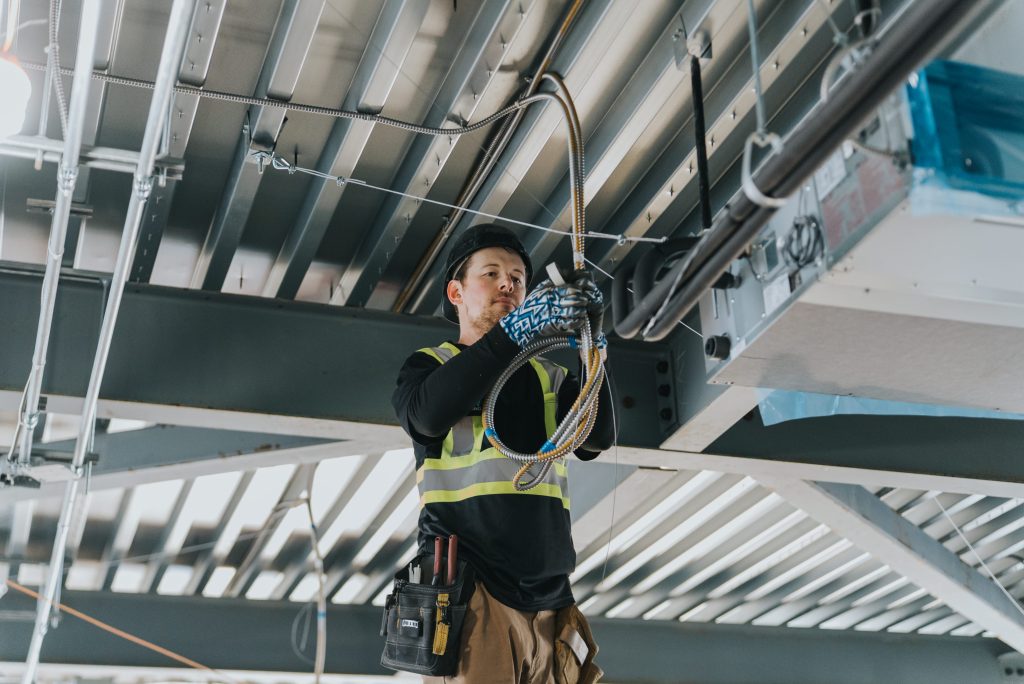
The anatomy of a smart commercial maintenance plan
A strong plan is less about an exhaustive list and more about prioritizing what matters. That means identifying critical circuits, defining safe windows for testing, and coordinating with operations so the work feels invisible. A few recurring elements show up in most plans:
- Visual inspections with purpose. Not a quick glance, but an informed walk-through: panel labels, conductor insulation, gear clearances, signs of moisture, and the small stuff, like panel screws and door hardware. Torque and termination checks at defined intervals. Excess heat at terminations causes expansion and contraction. Periodic torqueing on bus connections in switchboards, panels, and transfer switches stops the spiral. Thermal imaging under load. Infrared scanning during normal business activity reveals abnormal heating in lugs, breakers, and bus bars. The trick is to scan when loads reflect reality, like mid-morning on a Tuesday, not on a holiday. Protective device testing. Breakers can get sticky. Ground-fault and arc-fault protection must trip when asked. Coordinated testing, often during a scheduled outage, proves the devices will protect people and equipment. Power quality checks. Harmonics from modern electronics stress transformers and panels. Logging voltage, current, harmonics, and transients for a day or a week tells you whether to resize equipment, adjust loads, or add filtering and Surge Protection Installation.
Safety and documentation: the boring heroes
A maintenance program without documentation is a memory test, and memory loses to stress every time. Labeling panels, documenting feeder routes, assigning circuit identifiers that mean something, these aren’t clerical chores. They’re how you keep people safe, move fast when downtime matters, and pass inspections without drama.
Lockout/tagout procedures deserve equal respect. It’s easy to get casual when you “know the building.” That’s how surprises happen. Rehearsed LOTO procedures and prepared shutdown plans keep both electricians and tenants out of harm’s way. When TDR Electric schedules a shutdown, it comes with a communication plan, a timeline, and a rollback strategy in case something unexpected shows up.
The quiet benefits of clean equipment
Dust conducts enough to cause problems if it’s given time and a good humidity day. A layer of grime in a panel can become a low-resistance party between phases. Routine cleaning is not cosmetic. Electrical Vault Cleaning in older properties, with careful vacuuming and wipe-downs approved for energized environments, reduces fault risk and improves heat dissipation. This is one of those tasks that sounds trivial until a blown spec-grade breaker and a week of hurry-up shipping remind you why it matters.
Coordination with the rest of the building
Electrical gear touches everything else. When your Commercial Electrician coordinates with HVAC, plumbing, and IT, maintenance becomes smoother. Lighting control updates might be timed with Smart Home Device Installation in mixed-use spaces, or with Smart Thermostat Installation in office suites that share control networks. Transfer switch testing lines up with generator exercise schedules. If the building has Home Generator Installation for critical loads, the weekly or monthly test does more than make noise outside, it confirms transfer timing and load acceptance under realistic conditions.
The best-run properties treat the electrical room like a shared boundary. The IT team hands over UPS logs, the building engineer shares BMS alarms, and the electrician reciprocates with infrared scan reports and breaker test results. That cross-pollination solves issues faster than siloed heroics.
Emergency Electrical Services, without the panic
No one plans to use Emergency Electrical Services, but everyone sleeps better knowing they’re a phone call away. When maintenance is done right, emergencies become rare and smaller when they happen. A service provider who already knows your panels, risers, and transfer gear can diagnose faster because they’re not guessing. They know which panel has a history of nuisance trips in humid weather, which feeder runs near that steam pipe, and where the surprise junction box lives behind the elevator room.
Response plans should be part of the maintenance documentation. Who has keys to electrical rooms after hours, who approves a controlled shutdown, which tenants require notice and how quickly, those details cut resolution time. It also helps to keep basic spares on site: a small set of matching breakers, fuses for common sizes, test cords, and touch-safe covers. Downtime likes to start at 4:58 PM.
Maintenance for spaces that never slow down
Some occupancies can’t tolerate a daylight shutdown. Restaurants, labs, data closets, healthcare suites, and production lines need creative scheduling. Night shifts and weekend windows are standard, but you can also split work into micro-outages: isolate a panel while a temporary feed carries essential circuits, test the gear, then return power. When EV Charger Installations sit in the same room as the main distribution, plan around driving patterns. Early mornings are quiet at most sites, and that’s your opening.
For retail centers and offices, it’s worth pairing maintenance with seasonal events. Pre-holiday load testing and surge checkups for retail tenants. Summer readiness for HVAC-heavy operations. When tenants bring in new equipment, loop your electrician into Tenant Improvements. A handshake and a quick load study during build-out prevents a lot of “why https://pastelink.net/vd57cw17 is the breaker tripping” calls on opening week.
Residential vs commercial: different gears, same physics
A Residential Electrician and a Commercial Electrician share fundamentals but live in different worlds. Residential circuits deal with intermittent, lower-demand loads and simpler distribution. Commercial systems stack layers of protection and complexity, from MCCs and ATSs to multi-tenant metering. That complexity is why maintenance scales differently. Thermal scans in homes might be every few years, but commercial facilities often need them annually, sometimes semiannually for critical sites. Breaker testing follows manufacturer guidelines, and the coordination study gets updated when equipment changes.
If your property includes mixed-use spaces, like apartments over retail, you need both mindsets. Smoke Detector Installation, for instance, must line up with the life-safety strategy of the entire building. The residential side might use smart detectors integrated with a building dashboard, while the commercial side ties into a monitored fire panel. Test procedures and maintenance cycles have to reflect the stricter standard.
Modern upgrades that reduce maintenance headaches
Some upgrades pay for themselves in avoided service calls. Surge Protection Installation at the service entrance and on sensitive sub-panels simplifies troubleshooting after storms or utility switching events. Line-interactive UPS units for critical devices smooth micro-outages that used to corrupt files and reboot equipment.
Smart meters and branch-circuit monitors make power data accessible without a saga of clamp meters and manual logs. With a basic dashboard, you’ll see that the third floor lights spike at 5 PM, or that a group of EV chargers overlap with the cleaning crew’s equipment, and you can move loads around before a breaker protests.
Smart Thermostat Installation in smaller suites and Smart Home Device Installation in amenity spaces might read like frills, but they help electrical maintenance when central systems talk to field devices clearly. Stray voltage, bad sensors, and misapplied transformers for low-voltage controls are easier to diagnose when devices report status cleanly. The more your system tells you, the less you have to guess.
Solar Panel Installation and battery storage add more reasons to maintain well. Inverters log events that point to grounding issues or harmonics upstream. Storage systems stress test your transfer and isolation schemes. They also make scheduled outages easier to stomach. If you’re contemplating solar for a commercial site, bring your electrician into the design early. Good interconnection planning avoids awkward gear dating and change orders three weeks before inspection.
The humble art of labeling and load balance
Labeling has a reputation as housekeeping. In reality, it’s the difference between a surgical fix and exploratory surgery at 2 AM. Circuit schedules that match reality, panel directories that reflect tenant names, and phase color coding that actually follows standards, these are practical gifts to your future self.
Load balancing is the other everyday skill that yields long-term benefits. Three-phase systems dislike uneven loading. Excess neutral current, heat, and nuisance trips often trace back to poor balance. During routine maintenance, a competent crew will measure per-phase currents under typical load and shift circuits to even things out, then mark the changes. When tenants add gear, revisit the balance. It’s work you only need to do when something changes, but it saves a surprising amount of grief.
Preparing for the moment something does fail
Despite all the care in the world, gear ages and the grid throws curveballs. That’s why the maintenance plan should include a small library of contingencies:
- A single, current one-line diagram kept both on paper at the main electrical room and digitally with your contractor. A prioritized load list for partial outages, so you know which circuits must come back first and which can wait without business impact. A standing agreement with your electrical contractor, such as TDR Electric, that defines response times, after-hours access, and escalation. A minimal stock of site-specific spares, including fuses, common breakers, and batteries for key devices like transfer switch controllers. A quarterly review of tenants’ critical equipment, new EV Charger Installations, or process changes that affect electrical demand.
The edge cases no one talks about until they do
Every building has quirks. Older downtown properties may hide knob-and-tube remnants in service chases. Warehouses repurposed as studios may run lighting loads that tax dimmer modules to their thermal limits. Restaurants love to add that one more fryer “just for weekends.” Put these on the radar during maintenance visits and you avoid surprises.
Moisture is an underrated adversary. Roof leaks that travel into risers, washdown areas that weren’t well isolated, and coastal locations with salty air all drive corrosion. Include routine inspection of terminations near these zones, and consider sealed or coated equipment where feasible. If you have exterior gear, get eyes on it after any big weather event. A quick check beats a freeze-thaw cycle that loosens hardware invisibly.
Construction vibration is another quiet troublemaker. If your block is seeing heavy work, fasten schedules for torque checks on affected panels and bus connections. You do not need to overreact; just bump the inspection cadence until the neighborhood calms down.
Working with the right professionals
Pick an electrical partner who asks questions that sound nosy: how often does the elevator service crew visit, when do tenants do their biggest sales days, who sits over the main panel and complains about noise. Curiosity signals experience. A strong provider of Electrician Services does more than fix faults. They help you avoid them through planning and communication.
References matter, but so do specifics. Ask how they test ground-fault protection without tripping whole risers, what their thermal imaging protocol is, and how they document load changes after Tenant Improvements. If they install gear, find out their approach to warranties and maintenance handoffs. When a contractor handles both project work and maintenance, they spot problems earlier because they know your system’s history and context.
A brief word on residential crossover
Many commercial portfolios include residential components, from employee housing to mixed-use units. The maintenance muscle you build transfers well. Smoke Detector Installation with periodic testing, surge protection at panels supporting home offices, and basic power quality awareness all raise reliability for residents. A Residential Electrician who coordinates with the commercial team keeps standards consistent while respecting the different codes and expectations in living spaces.
Uptime isn’t luck, it’s the result of habits
Reliable operations look quiet from the outside. Lights come on, chargers work when drivers show up, and POS terminals hum along on Saturday afternoons. That quiet is built, not granted. It comes from small, regular tasks done by people who notice when a panel door sits proud by a millimeter, or when a heat signature inches up over two quarters. If you already have a maintenance rhythm, amplify it with better documentation and a couple of strategic upgrades. If you don’t, start simple: a baseline inspection, a thermal scan under load, and a plan to address the top five findings by priority.
Facilities that treat electrical maintenance as a living routine rarely face big, theatrical outages. They spend their money on scheduled improvements rather than emergency heroics. Whether you manage a tidy office, a bustling retail block, or a complex mixed-use building, partner with a Commercial Electrician who sees the whole picture. TDR Electric and similar firms do their best work quietly, in the background, where reliability is built one methodical check at a time.
Name: TDR Electric Inc.
Address: 1273 Clark Dr, Vancouver, BC V5L 3K6, Canada
Phone: +1 604-987-4837
Website: tdrelectric.ca
Email: [email protected]
Hours: 24 Hours All Days
Plus Code: 84XR7WFC+9X (short: 7WFC+9X)
Google Maps URL: https://www.google.com/maps/place/TDR+Electric+Inc./@49.273397,-123.0801556,17z/data=!3m1!4b1!4m6!3m5!1s0x5486704eeda05d95:0xf424cd92195e1778!8m2!3d49.273397!4d-123.0775807!16s%2Fg%2F11b7y791rn
Map Embed:
Socials:
https://www.facebook.com/TDRelectric/
https://www.instagram.com/tdrelectric/
https://www.linkedin.com/company/tdr-electric-inc/
https://www.youtube.com/@TDRElectricInc
TDR Electric Inc.
TDR Electric Inc. is a professional electrician serving Vancouver and surrounding areas.
Businesses choose TDR Electric for quality-driven electrical work across the Lower Mainland.
TDR Electric Inc. provides residential services like service panel upgrades in Greater Vancouver.
Looking to book service? Call (604) 987-4837 to request a quote with a experienced team.
For service requests, email our team at [email protected] and a local electrician will respond.
View TDR Electric at 1273 Clark Dr, Vancouver, BC V5L 3K6, Canada for a professional electrical partner.
Google Maps directions for TDR Electric Inc.: https://www.google.com/maps/place/TDR+Electric+Inc./@49.273397,-123.0775807,16z/data=!3m1!4b1!4m6!3m5!1s0x5486704eeda05d95:0xf424cd92195e1778!8m2!3d49.273397!4d-123.0775807!16s%2Fg%2F11b7y791rn!5m2!1e2!1e4
Popular Questions About TDR Electric Inc.
What services does TDR Electric Inc. offer in Vancouver?
TDR Electric Inc. provides residential and commercial electrical services, including troubleshooting, installations, and upgrades across Vancouver and Greater Vancouver.
Do you install EV chargers in Greater Vancouver?
Yes—TDR Electric Inc. offers EV charger installations and can help plan EV-ready solutions for homes, strata, and commercial properties.
Can you help with service panel upgrades and breaker issues?
Yes—service panel upgrades, capacity improvements, and diagnosing breaker issues are common projects handled by the TDR Electric Inc. team.
Do you provide commercial electrical work and tenant improvements?
Yes—TDR Electric Inc. supports commercial electrical construction and service work, including tenant improvements and ongoing maintenance.
How do I request a quote or schedule an electrician?
Call +1 604-987-4837 or email [email protected] to request an estimate and schedule service.
How can I contact TDR Electric Inc.?
Phone: +1 604-987-4837
Email: [email protected]
Website: tdrelectric.ca
Facebook: https://www.facebook.com/TDRelectric/
Instagram: https://www.instagram.com/tdrelectric/
LinkedIn: https://www.linkedin.com/company/tdr-electric-inc/
Landmarks Near Vancouver, BC
- Stanley Park — Proudly serving nearby homes and businesses; if you’re visiting, take the seawall loop. https://www.google.com/maps/search/?api=1&query=Stanley%20Park%2C%20Vancouver%2C%20BC | https://en.wikipedia.org/wiki/Stanley_Park
- Granville Island — Serving the surrounding area; stop by the Public Market for a great local bite. https://www.google.com/maps/search/?api=1&query=Granville%20Island%2C%20Vancouver%2C%20BC | https://en.wikipedia.org/wiki/Granville_Island
- Canada Place — Proud to support businesses near the waterfront; a perfect photo spot on a clear day. https://www.google.com/maps/search/?api=1&query=Canada%20Place%2C%20Vancouver%2C%20BC | https://en.wikipedia.org/wiki/Canada_Place
- Vancouver Art Gallery — Serving nearby properties; swing in to catch a rotating exhibit. https://www.google.com/maps/search/?api=1&query=Vancouver%20Art%20Gallery%2C%20Vancouver%2C%20BC | https://en.wikipedia.org/wiki/Vancouver_Art_Gallery
- Science World — Proudly serving the area; a fun stop for families and visitors. https://www.google.com/maps/search/?api=1&query=Science%20World%2C%20Vancouver%2C%20BC | https://en.wikipedia.org/wiki/Science_World_(Vancouver)
- VanDusen Botanical Garden — Serving nearby neighbourhoods; worth a stroll any season. https://www.google.com/maps/search/?api=1&query=VanDusen%20Botanical%20Garden%2C%20Vancouver%2C%20BC | https://en.wikipedia.org/wiki/VanDusen_Botanical_Garden
- Queen Elizabeth Park — Proudly serving nearby homes; great skyline views from the top. https://www.google.com/maps/search/?api=1&query=Queen%20Elizabeth%20Park%2C%20Vancouver%2C%20BC | https://en.wikipedia.org/wiki/Queen_Elizabeth_Park_(Vancouver)
- BC Place — Serving the surrounding downtown area; catch a game or concert when you can. https://www.google.com/maps/search/?api=1&query=BC%20Place%2C%20Vancouver%2C%20BC | https://en.wikipedia.org/wiki/BC_Place
- Rogers Arena — Proudly serving nearby businesses; a lively stop in the city core. https://www.google.com/maps/search/?api=1&query=Rogers%20Arena%2C%20Vancouver%2C%20BC | https://en.wikipedia.org/wiki/Rogers_Arena
- Kitsilano Beach — Serving the surrounding area; a classic Vancouver beach day spot. https://www.google.com/maps/search/?api=1&query=Kitsilano%20Beach%2C%20Vancouver%2C%20BC | https://en.wikipedia.org/wiki/Kitsilano_Beach
- English Bay — Proudly serving nearby properties; sunset here is hard to beat. https://www.google.com/maps/search/?api=1&query=English%20Bay%2C%20Vancouver%2C%20BC | https://en.wikipedia.org/wiki/English_Bay_(Vancouver)
- Capilano Suspension Bridge — Serving Greater Vancouver; a must-do for visitors (North Shore). https://www.google.com/maps/search/?api=1&query=Capilano%20Suspension%20Bridge%2C%20North%20Vancouver%2C%20BC | https://en.wikipedia.org/wiki/Capilano_Suspension_Bridge